
Wells County Civil Docket Searches
Your first stop is Indiana MyCase, the public face of the Odyssey court system. Pick Wells County there. A cause number beats a name every time. Civil cause numbers pair a court code with a case-type code, like 90D01-2608-SC-000123 for a small-claims cause in Superior or 90C01-2608-ES-000123 for an estate in Circuit. MyCase usually forgives missing hyphens and leading zeroes.
No number handy? Search a party or business name instead, choosing Civil, Family, or Probate to match the matter. Status and filing-date filters trim a crowded list. Common names still pull many causes, though, and the statewide search caps its results. Before trusting a match, compare the court, caption, filing date, and case code.
- Choose Case or Name search in MyCase.
- Select Wells County and the proper case-family filter.
- Enter the full cause number, last name, or business name.
- Open the match and verify its court and status.
- Read the newest CCS entries and linked public orders.
- Contact the correct clerk counter for an official or certified copy.
Searching Wells Civil Case Codes
The two Wells prefixes matter as much as the civil code itself. 90C01 marks Circuit Court; 90D01 marks Superior Court. After the filing month comes the code for the case family. CC means civil collection, and CT means tort. PL is plenary civil, MF mortgage foreclosure, EV eviction, and SC small claims. Domestic relations can show up as DR, DC, or DN.
| MyCase filter | Common Wells codes | Search clue |
|---|---|---|
| Civil | CC, CT, PL, MF, EV, SC | Party or business name |
| Family | DR, DC, DN, PO | Access may be limited |
| Probate | EM, ES, EU, GM, GU, TR | Usually Circuit assignment |
| Other civil | TP, TS, MI, XP, CB | Use exact cause if known |
The state's search tips cover sounds-like searching, wildcards, one-sided date ranges, and case-number history. A transfer or consolidation can change a court name or number while the old trail still counts.
Civil Dockets: What They Show
The clerk's official event index is the Chronological Case Summary, or CCS. It lists parties, attorneys, the filing date, status, pleadings, service events, motions, settings, rulings, judgments, and later enforcement. Each CCS description runs short. For actual terms, open a linked order. And remember the entry date may differ from the date of the event it records.
| Case number | Wells code, court, filing month, case family, and sequence. |
|---|---|
| Parties | Public caption and party roles, subject to access rules. |
| Filings | Complaint, answer, return of service, and later event descriptions. |
| Motions | Filed requests and the court's public rulings. |
| Settings | Conference, motion, trial, or other scheduled hearing. |
| Judgment | Final order, dismissal, default, or other disposition. |
Some civil orders appear online, yet many pleadings and exhibits live only at the clerk's office. A CCS with no linked complaint is not automatically an error. Ask the clerk whether the paper is public, undigitized, outside the online document classes, or excluded.
Wells Civil Cases by Court
Under Wells local allocation rules, an attorney or self-represented filer can often pick Circuit or Superior for ordinary civil matters. Special categories override that choice. Every small claim goes to Superior. Evictions land there too, unless the real estate ties to a Circuit matter, and a self-represented dissolution starts in Superior.
| Case family | Usual Wells court | Exception or clue |
|---|---|---|
| Small claims | Superior | Code SC |
| Eviction | Superior | Circuit if tied to its matter |
| Protection order | Superior | Circuit if related family cause is there |
| Estate, guardianship, trust | Circuit | Probate-family codes |
| Juvenile, adoption, paternity | Circuit | Stricter access can apply |
Mental-health matters also belong to Circuit. That split explains why a court page's broad jurisdiction description cannot predict where one docket sits. Follow related-case entries, transfer orders, and consolidation notes before picking a counter.
What Cases Fill the Civil Docket
Wells County civil court dockets hold disputes that share neither one access rule nor one filing path. Ordinary civil claims involve debt, contracts, torts, land, or foreclosure. Small claims run on a lower-dollar streamlined docket. Evictions carry their own code. Family and probate records surface in the same civil search environment, yet public document access varies sharply by code.
- Civil collection, contract, and plenary claims
- Tort and property disputes
- Mortgage foreclosure and eviction matters
- Small claims in Wells Superior Court
- Domestic relations and protection orders
- Estates, guardianships, and trusts in Circuit Court
Never assume a case labeled civil is fully open online. Juvenile, mental-health, adoption, paternity, medical, and protected personal data get different treatment. Treat the case code as the first clue, not the final access decision.
Wells Civil Filing Cost Context
The Wells County filing schedule is dated July 1, 2023. It offers examples, not a promise of today's total. It shows a $157 civil base plus $28 sheriff service, a $185 example. Small claims show an $87 base and $28 service, or $115. Probate lists $177 plus $28 service, $205 in the example. Extra defendants, garnishees, jury charges, approved dispute-resolution costs, or later law changes can move the number. Call the clerk before you budget.
| Filing example | Base | With listed service |
|---|---|---|
| General civil | $157 | $185 |
| Small claims | $87 | $115 |
| Probate | $177 | $205 |
Before paying or filing, confirm a current case-specific amount with the clerk. Filing costs are not copy charges, judgment balances, or court-reporter transcript rates. The manifest's official weighted-caseload source shows how the state measures court workload.
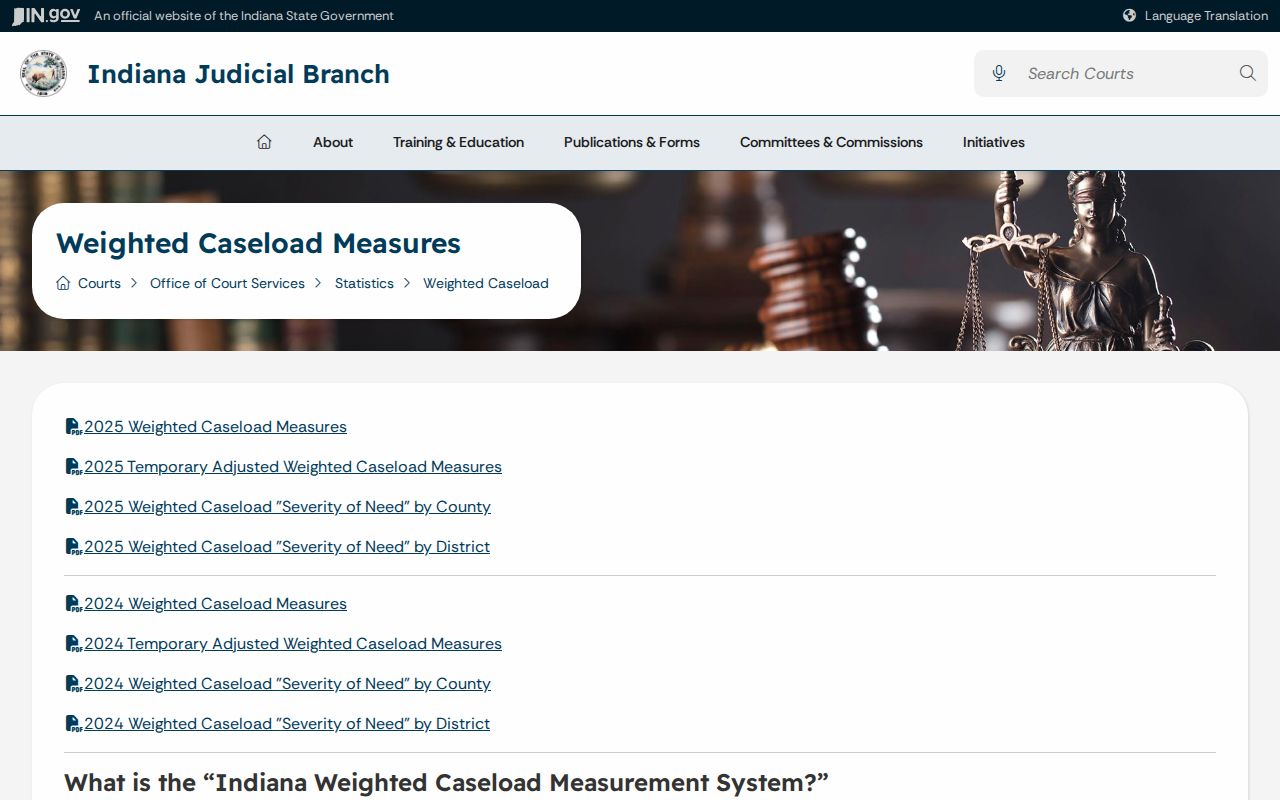
Weighted figures serve as planning measures only, never a fee schedule or forecast for one civil case.
Hearings on the Civil Docket
A civil CCS docket can show many kinds of settings. Status conferences, motion hearings, pretrial conferences, bench or jury trials, and judgment proceedings all appear there. Keep one thing straight, though. The date a case was filed is never the hearing date. A scheduling order may set several deadlines, and a later CCS entry can reset just one event, so read the newest public order and the newest entry together.
CourtCal runs as a separate public calendar. Wells Circuit settings appear there, but no Wells Superior calendar selection does. That makes MyCase and the Superior clerk counter the safer chain for a Wells County small-claims, eviction, or ordinary civil matter. If a continuance was just granted or an appearance is required, phone confirmation is wise.
Watch what each label actually means. A continuance only moves a setting. A default can follow a missed response or missed appearance, but its legal effect must come from the actual order, not the label. A transfer changes which court holds the case. Note: a new CCS setting can supersede an older notice, so always confirm the latest court, date, time, and hearing type.
Wells Clerk Copies for Civil Cases
County Clerk Beth Davis runs separate Circuit and Superior service counters at the Wells County Courthouse. The cause-number prefix tells you which counter to use. Bring the full cause number, the document title or date, and whether you want a plain or certified copy. Staff can explain document availability and official certification. They cannot give legal advice.
Wells County Clerk
102 W. Market St., Suite 201
Bluffton, IN 46714
Circuit: (260) 824-6479
Superior: (260) 824-6483
Weekdays, 8:00 a.m. to 4:30 p.m.
clerk@wellscounty.org
The clerk accepts requests in person, by phone, by email, and by mail. The inquiry just has to be specific enough. Call before mailing anything original. The clerk page publishes no single universal ID, payment, or turnaround policy. A fax may help route a question. But Wells rules do not accept pleadings or motions by fax. The clerk offers no public terminal and does not promise same-day certification.
Wells Civil Docket Caseload Context
The official 2024 Indiana court report covered Wells courts. It counted 1,406 new civil filings. The same report logged 1,371 civil dispositions and 844 pending civil cases. Civil-violation matters were counted separately: 1,160 new filings and 1,346 pending. These totals describe workload groups, nothing more. They cannot tell you how long one lawsuit will take. A statistical disposition is not a judgment for either side.
The Indiana trial-court statistics system supports this public context.
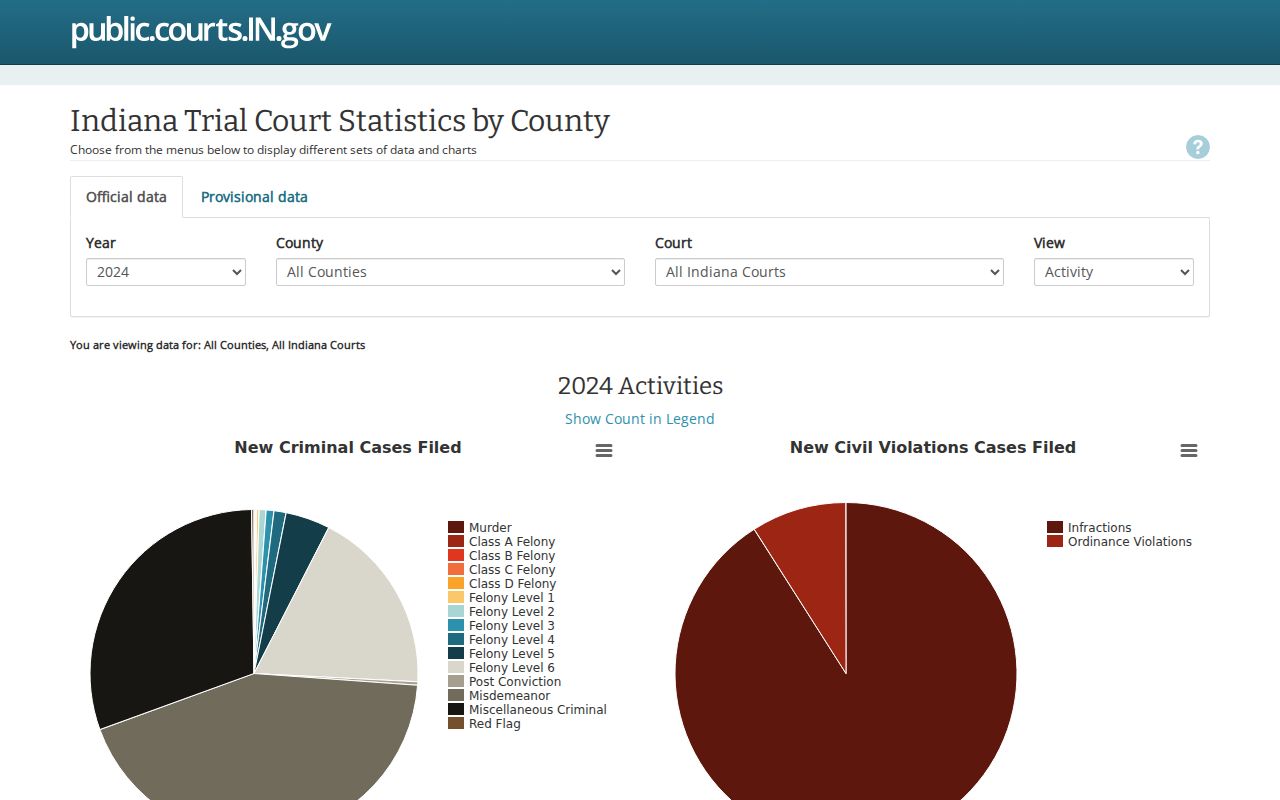
Track a single case with the live CCS and the court orders, never with county totals.
Who Can See Civil Dockets
Indiana Access to Court Records Rule 4 presumes public access unless something excludes the material. Rule 5 lists the confidential cases, records, and personal data that qualify. The split can run down the middle of one file. A public CCS stays visible. A medical record, financial exhibit, custody report, or protected address is withheld.
Search MyCase without an account to see the public layer. A party may reach more eligible documents after identity and access-code steps. Some public papers have no link. Ask the maintaining clerk for those. Contact works in person, by phone, by email, or through confirmed mail. One caution applies. Indiana's Access to Public Records Act and the county's general request form do not override judicial access rules.
Online absence is not a final access ruling. Ask whether the item is undigitized, outside the remote-access class, or confidential under a rule or order.
Sealed files, juvenile matters, mental-health cases, older paternity records, adoptions, and some protection-order records all need special care. A clerk can describe the request route but cannot release excluded material without legal authority.